
EDUCATION:
PSYCHEDELICS 101
DISCLAIMER
The content shared on www.psychedelics.design is created with the intention of reducing potential harm related to the exploration of psychedelic compounds. It does not promote, encourage, or endorse the use of psychedelics.
This material is inspired by ongoing research and evolving discourse within the psychedelic field. It is not medical, psychiatric, or therapeutic advice. Any decisions made based on this content are solely the responsibility of the individual. We do not accept liability for any outcomes resulting from the use or misinterpretation of this information. Please be aware that some topics discussed may involve substances that are illegal in certain jurisdictions. Nothing on this site should be taken as a recommendation to break the law. The views expressed are independent and not affiliated with any academic, clinical, or institutional body. Engage with curiosity, care, and full awareness of your local laws and personal context
RISKS & SAFETY
Psychedelic experiences can carry psychological, physical, and legal risks. This section gathers essential information on safety considerations, set and setting, dosage, and integration practices. While not offering medical advice or endorsements, Psychedelics Design believes that informed, ethical design must include an understanding of harm reduction strategies — for oneself, others, and the broader culture.
Organizations that specialize in harm reduction resources for psychedelics:
The Zendo Project provides on location psychedelic harm reduction support and education. Their website provides a comprehensive set of resources including training manuals and crisis hotlines.
The Fireside Project offers free peer support by phone and text message to people in the midst of psychedelic experiences, people holding space for others who are in the midst of psychedelic experiences, and people integrating past psychedelic experiences.
National Harm Reduction Coalition (US) offers advocacy, education, and public health resources promoting safer substance use.
Drug Science (UK) find independent research and evidence-based policy on psychoactive substances.
Correlation (EU) the European Harm Reduction Network connecting organizations across the continent.
Psychedelic Support (US) find a directory of licensed integration therapists, training, and educational resources.

Even with preparation, a psychedelic experience can become overwhelming. This doesn’t always mean something is wrong — but it does mean support matters.
These tools are here for you, or anyone you’re holding space for, when things feel too intense, too weird, or just too much.
Designing for a safer experience begins with honest self-awareness.
A Note on Use, Legality & Responsibility
As interest in psychedelics continues to grow — in design studios, research labs, creative circles, and beyond — so do the questions: Is it safe? Is it for me? How do I prepare?
Let’s be clear: Most psychedelics remain illegal in the UK and many other countries, with substances like psilocybin and LSD classified as Class A drugs. Legal consequences are serious — and we do not encourage or advise illegal activity. We also do not provide instructions for use.
What we do offer is evidence-informed, design-conscious content for harm reduction — because people are using these substances, legally or not, and deserve access to tools that help minimize risk and maximize care.

Your body is part of the story, too.
When we talk about psychedelics, the focus often lands on the mind — emotions, perceptions, memories. But your physical body also participates in the experience, and it deserves equal attention when considering long-term impact.
Here are some things of what we know (and don’t know) about how these substances interact with your physiology over time.

What stays with you after the experience ends.
Psychedelics are often described as non-linear tools. They don’t always give you what you expect — and the real impact often shows up not during the trip, but in the weeks, months, or even years afterward.
Some people report a sense of renewal. Others feel destabilized. For many, it’s a mix — the insights land, but the integration takes time.
There’s no universal outcome. But there are patterns worth knowing.
JOURNEY ESSENTIALS

Designing the inner and outer spaces that shape your experience.
One of the most well-known principles in psychedelic work is “set and setting” — your mindset going in, and the environment you’re in when the experience unfolds.
This idea comes not from Silicon Valley biohackers, but from researchers and elders dating back to the 1950s. And it’s held up across time, therapy rooms, festivals, and ceremonies around the world.
Think of it like this: your mindset is the lens, and your setting is the stage. Together, they shape the show.

You can’t control the journey — but you can design for resilience.
In design, we know this: expectations shape experience. What you believe might happen — or hope will happen — has the power to color what actually unfolds.
With psychedelics, this principle gets amplified. So before you step in, it’s worth asking: What story are you already telling yourself about this?

Holding space. Being present. Not fixing, not guiding — just witnessing.
In the psychedelic space, a sitter (or trip sitter) is someone who stays sober and grounded while another person journeys. Their role isn’t to guide, interpret, or interfere — but simply to hold the space with presence, safety, and trust.
You don’t need credentials to be a sitter. But you do need emotional intelligence, boundaries, and the ability to stay calm in the unknown.

The experience ends. The process begins.
What happens after the psychedelic journey matters just as much — if not more — than what happens during it. This is where transformation becomes sustainable. Where insights become lived. Where the spark becomes design, ritual, language, or practice.
Subtle shifts. Big questions. What happens when you redesign your baseline?
Microdosing — the practice of taking sub-perceptual doses of psychedelics (usually LSD or psilocybin) — has become a creative world buzzword. It's been linked to sharper focus, enhanced problem-solving, emotional resilience, and even mood stability.
But despite the headlines, the science is still catching up. And the experience? Highly personal, often overhyped, and still legally risky in most places.
Let’s zoom out — and in.
SUBSTANCES
This section offers an overview of selected psychedelic compounds — both classic and non-classic — that have been the focus of scientific and cultural attention. The entries are not exhaustive, but instead curated to reflect substances most relevant to contemporary discourse in design, art, and research.
Psychedelics have been shown to support health and well-being, particularly in therapeutic settings, and may open meaningful personal, philosophical, or spiritual perspectives. As a class, they are considered to have low abuse potential (they are not known to be addictive) and very low physical toxicity.
At the same time, psychedelics are not without risks. Under their influence, individuals may act in ways that put themselves or others in danger, leading to accidents or injuries. Experiences can also sometimes trigger confusion, anxiety, or mood disturbances, and in rare cases, may contribute to episodes of psychosis that persist beyond the session.
Psychedelics Design does not promote or encourage the use of any substance. The information here is provided solely for educational purposes.

Also known as: Acid, Lucy, LSD‑25
Category: Classic psychedelic (ergoline derivative)
LSD (lysergic Acid diethylamide) is a synthetic compound derived from ergot fungus, first created by Swiss chemist Albert Hofmann in 1938. Its powerful psychoactive effects, discovered accidentally in 1943, occur at microgram-level doses. Typically taken as blotter paper or liquid, LSD’s effects begin within 20–40 minutes and last 8–12 hours, profoundly altering perception, mood, and thought.
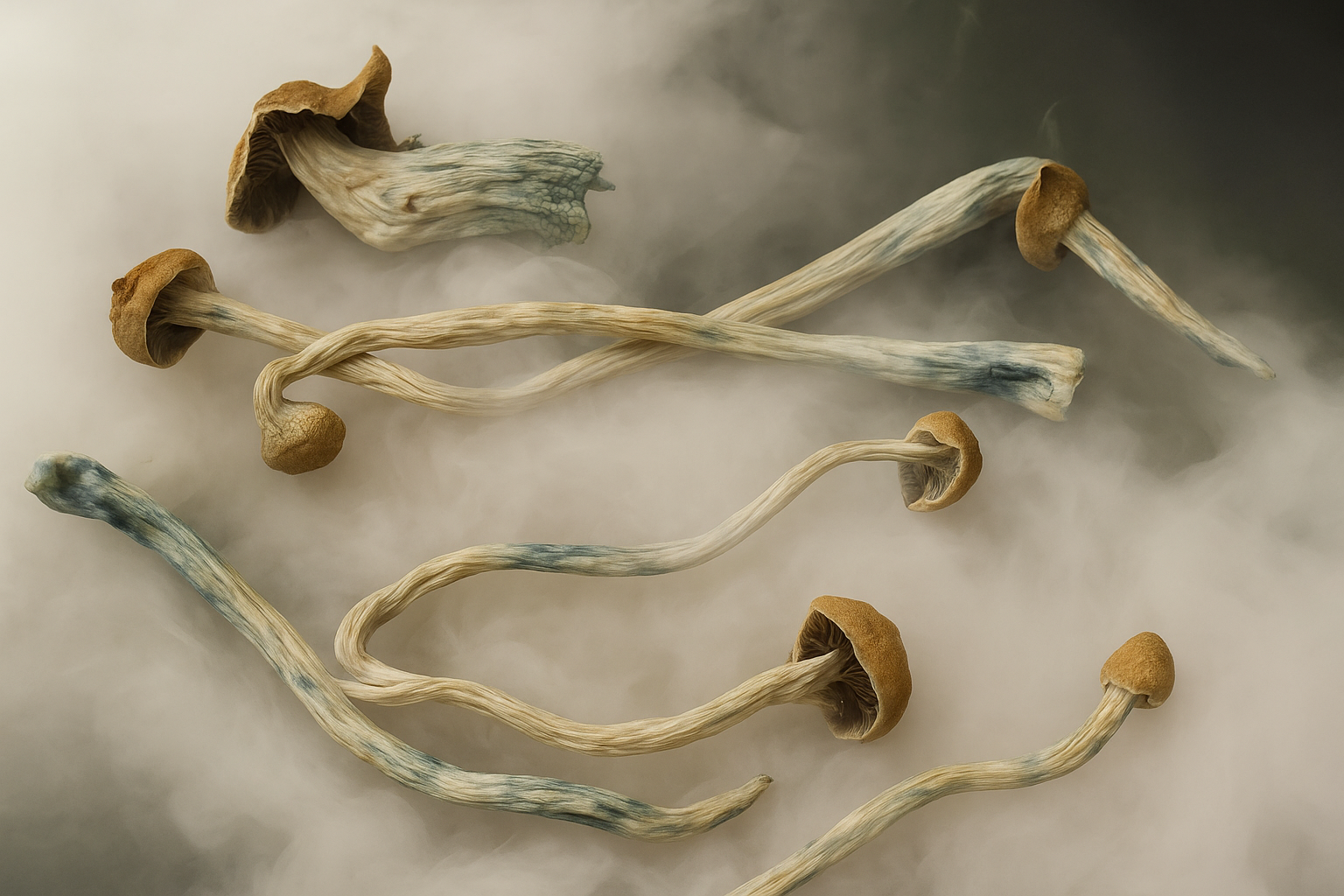
Also known as: Magic Mushrooms, Shrooms
Category: Classic psychedelic (tryptamine)
Psilocybin is a naturally occurring compound found in over 180 species of mushrooms, many of which have been used in traditional healing and spiritual practices for generations. Typically taken by eating dried or fresh mushrooms, brewing them into tea, or consuming capsules, psilocybin is most often ingested orally. Effects usually begin within 30 to 60 minutes, peaking between 1 to 3 hours, and the overall journey can last around 6 to 8 hours—though the sense of time often stretches or dissolves entirely.

Also known as: Ecstasy, E, X, XTC, Rolls, Beans, Adam, Molly
Category: Empathogen / Entactogen (phenethylamine)
MDMA is one of the most popular recreational psychoactives. Originally synthesized in 1912, MDMA (3,4-methylenedioxymethamphetamine) is a synthetic compound that enhances emotional openness, empathy, and bonding. It’s not a classic psychedelic but is often grouped with them for its therapeutic and consciousness-expanding properties. Usually taken orally, it begins working in 30–45 minutes and lasts 3–4 hours. MDMA triggers a surge of serotonin, along with dopamine and norepinephrine, affecting mood, emotion, and memory — creating a temporary state of deep connection and insight.
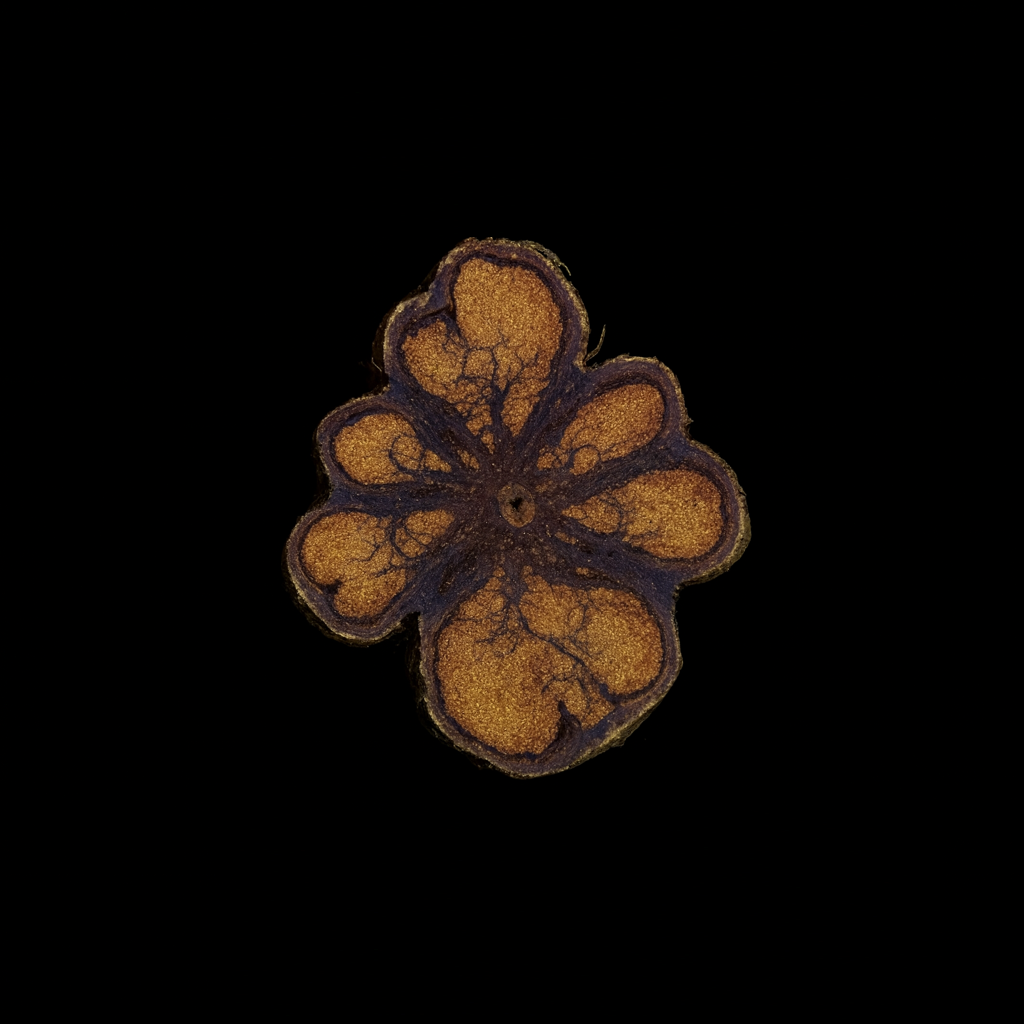
Also known as: Yagé, Daime, The Vine, Waska
Category: Psychedelic brew (DMT + MAOIs)
Ayahuasca is a traditional Amazonian brew made by combining the Banisteriopsis caapi vine with DMT-containing plants like Psychotria viridis. The vine contains MAOIs, which allow orally consumed DMT to become psychoactive by preventing its breakdown in the gut. The effects typically begin within 30 minutes and last around four hours, often involving vivid visions, emotional release, and deep introspection. Used for centuries in Indigenous spiritual and healing ceremonies, ayahuasca’s effects align with classic psychedelics but carry a distinctly visionary and somatic tone.
Also known as: N,N-Dimethyltryptamine, Spirit Molecule, Dimitri, Elf Spice
Category: Classic psychedelic (tryptamine)
Overview
DMT (N,N-dimethyltryptamine) is a powerful, fast-acting psychedelic naturally found in plants, animals, and the human brain. Though its biological function in humans is still unclear, research suggests it may play a role in dream states or altered consciousness. When inhaled or injected, DMT rapidly crosses the blood-brain barrier, inducing intensely visual and immersive experiences within seconds. These states often involve complex imagery, emotional depth, and a sense of entering non-ordinary realms. The effects are brief—typically lasting 20 to 30 minutes—but profoundly impactful.
Also known as: The God Molecule, “The Toad” (from Bufo alvarius), synthetic 5-MeO
Category: Tryptamine (ultra-potent entheogen)
5-MeO-DMT is a potent, fast-acting psychedelic often described as a “cousin” to DMT—but with a profoundly different character. Rather than vivid visuals, it tends to induce non-dual, ego-dissolving states that are energetic, existential, and sometimes overwhelming.

Also known as: Mescalito, The Divine Cactus, Huachuma, The Grandfather
Category: Phenethylamine (classic psychedelic)
Mescaline is a naturally occurring psychedelic compound found in several cacti species, most notably Peyote (Lophophora williamsii) and San Pedro (Echinopsis pachanoi). Unlike tryptamines like psilocybin or DMT, mescaline’s structure and effects belong to the phenethylamine class — offering a gentler, heart-centered, and often visionary experience marked by vivid visuals, emotional openness, and philosophical introspection.
Peyote has been used ceremonially for thousands of years by Indigenous peoples in North America. San Pedro, native to the Andes, is considered a sacred teacher plant in Andean cosmologies. Despite sharing mescaline as a primary compound, these plants hold distinct cultural identities, preparation rituals, and ceremonial lineages.
Mescaline is typically consumed as a brewed tea, raw slices of cactus, or dried powder. Its effects are long-lasting, often spanning 8–12 hours, and deeply tied to setting, intention, and physical comfort.
Also known as: Iboga (plant), “root bark,” Tabernanthe iboga
Category: Atypical psychedelic / dissociative / oneirogen (dreamlike)
A long-acting psychoactive alkaloid extracted from the root bark of Tabernanthe iboga, a shrub native to Central and West Africa. Traditionally used in Bwiti spiritual practices and initiation rites, it has gained modern recognition for its potential to interrupt opioid dependence and other severe addictions. Ibogaine is pharmacologically complex, interacting with multiple neurotransmitter systems — including serotonin, dopamine, glutamate, acetylcholine, and opioid receptors — though its exact mechanisms are still not fully understood. Effects typically begin within 30 minutes to 3 hours after ingestion and can last 18 to 36 hours.

Also known as: Fly Agaric, Soma, Panther Cap (related species)
Category: Deliriant / Oneirogen / GABAergic psychoactive (not a classic psychedelic)
Amanita muscaria, or fly agaric, is a striking red-capped mushroom with white spots, rooted in folklore and traditional use as a sedative. Unlike psilocybin species, it contains muscimol and ibotenic acid, which act on GABA and glutamate receptors, producing dreamlike, dissociative, or euphoric states. Effects may include dizziness, heightened sensory perception, confusion, and visual distortions. Though rarely fatal, the mushroom demands deep caution and cultural respect. Its mythic image often belies its complex and disorienting nature.
Also known as: K, Special K, Kit-Kat, Vitamin K
Category: Dissociative anesthetic with psychedelic properties
Ketamine is a synthetic dissociative originally developed in the 1960s as a medical anesthetic. Today, it's used in both emergency medicine and off-label mental health treatments, including depression and chronic pain. Unlike classic psychedelics, ketamine works primarily on glutamate pathways (via NMDA receptor antagonism), influencing mood and perception. It’s administered via IV, injection, lozenge, or nasal spray, and at sub-anesthetic doses, it produces a dreamlike, out-of-body experience with psychedelic qualities. At higher doses, effects deepen into dissociation and ego disruption.

Also known as: Nexus, Bees, Bromo
Category: Synthetic psychedelic (phenethylamine)
2C-B (4-bromo-2,5-dimethoxyphenethylamine) is a semi-synthetic psychedelic compound first synthesized by chemist Alexander Shulgin in 1974. Known for its hybrid nature, it bridges the gap between empathogens (like MDMA) and classic psychedelics (like LSD or mescaline), offering a unique mix of emotional openness, sensory enhancement, and visual distortion—often without overwhelming ego loss or intense introspection. Users commonly describe it as both playful and insightful, with a distinctly sensual or social edge.

Also known as: Salvia, Diviner’s Sage, Maria Pastora, Seer's Sage, yerba de la pastora, Magic Mint, Purple Sticky, Diviner’s Sage, Sally-D
Category: Dissociative hallucinogen (Salvinorin A)
Salvia divinorum is a perennial sage native to Oaxaca, Mexico. Unlike classic psychedelics that act on serotonin receptors, salvia’s effects are mediated by salvinorin A, a potent and selective kappa-opioid receptor agonist—making it neurochemically and experientially distinct from LSD, psilocybin, or DMT.
It is a species of plant in the sage genus Salvia, known for its transient psychoactive properties when its leaves, or extracts made from the leaves, are administered by smoking, chewing, or drinking (as a tea). Users also drop a small amount of salvia-containing tincture under the tongue.

Also known as: Sceletium tortuosum, Kougoed
Category: Serotonergic empathogen / Mood-altering plant (not a classic psychedelic)
Kanna (Sceletium tortuosum) is a succulent plant native to South Africa, traditionally used to elevate mood, ease tension, and support social bonding. It contains alkaloids like mesembrine that act primarily as serotonin reuptake inhibitors (SSRIs) and PDE4 inhibitors, modulating mood and cognition. Kanna is psychoactive not sychedelic, meaning it “affects the mind, mood, consciousness, and emotions, and passes your blood-brain barrier. While both have an effect on your brain and its functions, not all psychoactive substances are psychedelic.”
Depending on dose and method (chewed, snuffed, smoked, or taken as tincture), it can be stimulating or sedating, making it a flexible tool for emotional regulation, trauma support, or mood balance. Kanna is increasingly popular in natural nootropic and psychedelic-adjacent wellness circles, and is sometimes microdosed or combined with breathwork and therapy.

Also known as: Nymphaea caerulea
Category: Ethnobotanical sedative / aphrodisiac
Blue Lotus (Nymphaea caerulea) is a psychoactive water lily native to Egypt and East Africa. Traditionally used as a natural aphrodisiac, sleep aid, and anxiety reliever, it contains the active alkaloids apomorphine and nuciferine, which interact with the dopamine and serotonin systems, producing subtle mood-lifting and calming effects. Its use spans millennia, particularly in spiritual and sensual contexts.

Also known as: Ergine, d-lysergic acid amide, Hawaiian Baby Woodrose, Morning Glory
Category: Naturally occurring psychedelic (ergoline alkaloid)
LSA (lysergic acid amide), also called ergine, is a naturally occurring psychedelic from the ergoline alkaloid family that is chemically related to LSD but is substantially less potent. It is found primarily in the seeds of plants such as Ipomoea tricolor (morning glory), Ipomoea corymbosa (ololiuqui), and Argyreia nervosa (Hawaiian baby woodrose). LSA shares structural similarities with LSD, though it typically induces more sedating, body-heavy, and sometimes nauseating effects, contrasting with LSD's sharp, clear psychedelic profile. Its effects often feel more grounded and introspective with a dreamy quality.
NEED SUPPORT?
Psychedelics Design is a creative and educational platform. We do not provide therapy or crisis intervention services.
If you or someone you know is in immediate distress, please reach out to a trusted professional or one of the support lines below:
Fireside Project (U.S.): Call or Text “FIRE” to 741741
Talk to Someone Now: www.mentalhealthhotline.org
Mind UK: 0300 123 3393
Samaritans (EU): 116 123
If you're seeking psychedelic integration resources, we recommend starting with: